

Don’t let a faulty air conditioner make you sweat – contact Coral Air Conditioning in Captiva Island today for an in-depth HVAC inspection!
Is your home suddenly feeling warmer than usual despite adjusting the thermostat? Maybe only parts of your residence feel cool and comfortable, or your air conditioner fails to turn on completely. No matter the reason, not getting enough cool relief will have you asking, “Why did my AC stop working?”
Coral Air Conditioning, a leading provider of AC repair services in Captiva Island, FL, knows that your cooling system can stop working for multiple reasons. Keep reading to learn why your air conditioner may be failing — and what you can do about it.
Common Reasons Your AC Stopped Working in Captiva Island
Captiva Island’s year-round heat, humidity, and salt air create demanding conditions for air conditioning systems. Understanding the most likely causes of AC failure helps you diagnose the issue faster — and know when to call a professional before the problem gets worse.
1. Thermostat Malfunction or Incorrect Settings
Captiva Island experiences year-round sunlight, heat, and humidity — so residents know just how low to set their thermostats to keep the home comfortable. But it’s surprisingly easy to make thermostat mistakes that make it seem like the AC has stopped working.
Before assuming a mechanical failure, check the following:
- Is the thermostat set to “Cool” mode — not “Heat” or “Fan Only”?
- Is the set temperature lower than the current room temperature? If not, the system won’t activate the cooling cycle.
- Does the thermostat have power? If it runs on batteries, weak or dead batteries can prevent the thermostat from sending signals to the AC unit — replace them and see if cooling resumes.
- Is the display blank or unresponsive? This may indicate a wiring issue or a dead thermostat that needs to be replaced.
These simple checks resolve a surprising number of “why did my AC stop working?” calls. Always start here before calling a technician.
2. Ice on the Air Conditioner’s Evaporator Coils
Ice on your AC’s evaporator coils might not seem like a serious problem — but it almost always signals restricted airflow or a refrigerant leak, both of which prevent the system from effectively removing heat and moisture from your indoor air.
If you see ice on the coils or refrigerant lines, follow these steps:
- Turn off the system’s power immediately — running an AC with frozen coils can cause liquid refrigerant to reach the compressor, resulting in serious and costly damage
- Switch to “Fan Only” mode to begin defrosting the coils without running the compressor
- Check for blockages around the air filter, vents, and registers — a restricted airflow caused by a dirty filter or blocked vent is the most common cause of frozen coils
- If blockages are clear, a refrigerant leak is the likely cause — leave the system off and contact a qualified HVAC technician
Important: Exposure to refrigerant can cause serious health problems, including dizziness, chemical burns, and respiratory distress. Never attempt to handle refrigerant yourself — always leave leak diagnosis and repair to licensed professionals.
3. Dirty or Clogged Air Filter
A dirty air filter is one of the most common causes of AC problems in Captiva Island — and one of the most preventable.
Your cooling system’s filter captures airborne particles — pollen, dust, mold spores, and other contaminants — as air circulates through the system. In Captiva Island’s humid, coastal environment, filters can clog faster than in drier climates due to higher moisture levels, salt air, and year-round AC usage.
When the filter becomes clogged, airflow to and from the air conditioner becomes severely restricted. This causes the unit to:
- Overwork itself trying to pull air through a blocked filter
- Consume significantly more energy — according to the U.S. Department of Energy, a clogged filter can increase energy consumption by 5 to 15 percent
- Prematurely wear down internal components including the blower motor and evaporator coil
- Shut down completely if the restriction becomes severe enough to trigger a safety cutoff
The fix is simple: Replace the air filter at least every 90 days. In Captiva Island’s year-round heat, or if you have pets or allergies, checking it monthly is a better habit.
4. Tripped Circuit Breaker
When an AC stops working entirely and won’t turn on, a tripped circuit breaker is often the culprit — and it’s worth checking before assuming a major mechanical failure.
Circuit breakers trip when too much electrical current flows through the circuit. When this happens to an air conditioner, the system shuts down automatically to protect itself and your home’s electrical system from damage.
To reset a tripped breaker:
- Locate your home’s electrical panel
- Find the breaker labeled “AC” or “Air Conditioner”
- Flip it fully to the “Off” position first, then back to “On”
Important: If the breaker trips again immediately or shortly after resetting — stop resetting it. A repeatedly tripping breaker signals a serious underlying electrical fault, such as a short circuit or compressor issue. Continued resets can cause damage or create a fire hazard. Schedule an HVAC inspection with Coral Air Conditioning right away.
5. Failed or Failing Capacitors
Capacitors are essential components in your air conditioning system — they store and release the electrical energy needed to start and run the blower fan motor and compressor. Without functioning capacitors, your AC simply can’t start or sustain operation.
In Captiva Island’s high-demand climate, capacitors work harder and longer than in most other regions, which accelerates wear. Capacitor failure is one of the most common mechanical causes of AC shutdown in Florida’s hot, humid summers.
Warning signs of a failing capacitor:
- Humming sound from the outdoor unit when the system tries to start — the motor is attempting to run but can’t get enough power to turn over
- Short cycling — the system turns on and off rapidly without completing a full cooling cycle
- Random shutoffs — the AC stops mid-cycle for no apparent reason
- The outdoor unit doesn’t start even though the thermostat is calling for cooling
Capacitor replacement is not a DIY task — the components hold dangerous electrical charge even after the system is powered off. Always have a licensed HVAC technician diagnose and replace a failed capacitor. Contact Coral Air Conditioning to schedule a capacitor inspection or replacement in Captiva Island.
When to Call a Professional AC Technician
Some AC problems are safe and straightforward to address yourself. Others require a licensed HVAC technician — and waiting too long on those can lead to compressor failure, the most expensive AC repair possible.
Call Coral Air Conditioning immediately if:
- The circuit breaker trips again after resetting
- You see ice on the coils or refrigerant lines and clearing the filter didn’t resolve it
- The AC hums but won’t start — likely a capacitor issue
- You notice hissing or bubbling sounds near the refrigerant lines — possible refrigerant leak
- Your home never reaches the set temperature despite the AC running continuously
- The system is more than 10–15 years old and showing recurring problems — a repair-vs-replace assessment may be more cost-effective
In Captiva Island’s climate, a failing AC isn’t just uncomfortable — it’s a health concern during periods of extreme heat and humidity. Don’t wait until a small issue becomes a full system failure.
Key Takeaways
- Start every AC diagnosis with the simplest checks first: thermostat settings, fresh batteries, and a clean air filter — these resolve the majority of “why did my AC stop working?” situations.
- Replace your air filter every 90 days minimum in Captiva Island — monthly if you have pets, allergies, or run the AC year-round. The DOE confirms a dirty filter raises energy use by 5–15%.
- Ice on the coils = system off immediately. Running the AC with frozen coils can destroy the compressor. Switch to “Fan Only” to defrost and call a technician.
- A tripped breaker that keeps tripping is never a “just reset it” situation — it signals a serious electrical fault requiring professional inspection.
- Capacitor failure is extremely common in Florida’s demanding climate — humming sounds and short cycling are the key warning signs.
- When in doubt, contact Coral Air Conditioning — Captiva Island’s trusted AC repair professionals — for a fast, accurate diagnosis and repair.
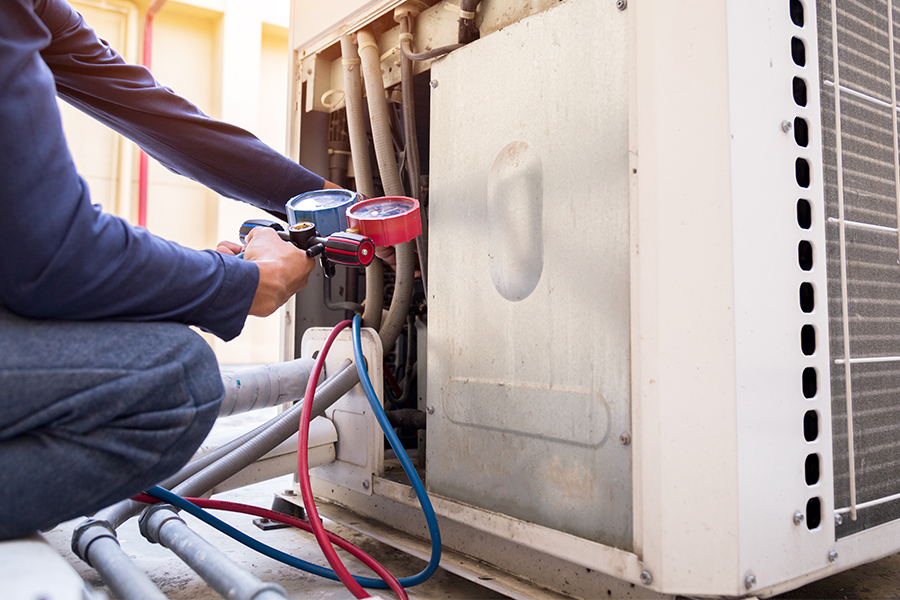
Let Captiva Island’s Go-To Air Conditioning Company Restore Your Cooling System
With our professionals at Coral Air Conditioning caring for your cooling unit, you will never have to ask, “Why did my AC stop working?”
As one of the top air conditioning contractors serving Captiva Island, Florida, our skilled, fully licensed technicians will quickly get to the root of the problem and implement the best repair solution! Our five-star crew knows everything from the best thermostat settings to effective solutions for blower motor failure. Schedule your appointment with Coral Air Conditioning’s cooling experts today!