
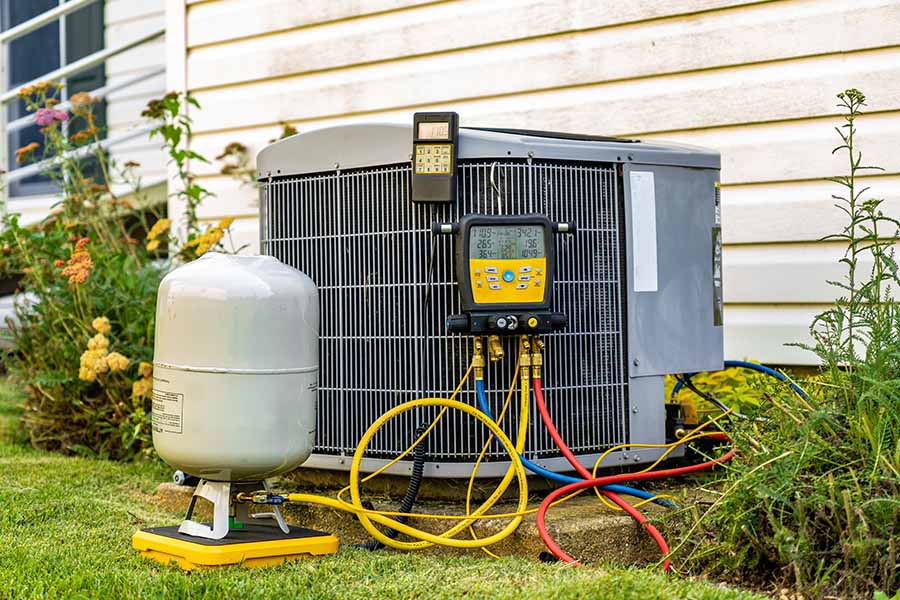
Key Points
- A hissing noise from your AC is most commonly caused by one of two things: a refrigerant leak or a faulty compressor — both require professional diagnosis and repair.
- A brief hissing sound as refrigerant passes through the expansion valve is normal — the concern is when the sound persists for more than a few seconds.
- According to the U.S. Environmental Protection Agency, refrigerant leaks are both an environmental hazard and a safety risk — never attempt to repair a leak yourself or place an open flame near a suspected leak.
- Refrigerant leak warning signs: hissing or bubbling sounds, unusually high energy bills, and poor cooling performance.
- Compressor warning signs: steady hissing, shrieking, or whistling from the outdoor unit — a pressure buildup issue that can cause irreparable damage if not addressed promptly.
- If your system is over 10 years old, uses R-410A refrigerant (banned by the EPA starting 2025), or has rising energy bills, replacement is likely more cost-effective than repair.
- Call Coral Air Conditioning for AC repair in Sanibel Island, FL — or request emergency service if your system needs immediate attention.
Our air conditioners get plenty of use here in beautiful Sanibel Island, where the weather stays warm all year long. Imagine on one such warm day, your air conditioner starts making a hissing noise. You wonder, “Why is my AC making a hissing noise, and how do I stop it?”
Learn the top causes of a hissing air conditioner below, then call us for AC repair in Sanibel Island, FL.
Why Is My AC Making a Hissing Noise? AC Troubleshooting for Sanibel Island Homeowners
Hearing a hissing sound from your cooling unit can be alarming. Some homeowners worry their system might catch on fire or even explode. Fortunately, that’s unlikely — but it isn’t impossible, which is why investigating the sound promptly matters.
In some cases, a hissing sound is completely normal. Your air conditioner might make this sound as refrigerant passes through the expansion valve — and it should only last a few seconds. If the hissing persists longer than that, it’s time to troubleshoot.
Low or Leaking Refrigerant
All air conditioners — from older models to modern units — rely on refrigerant to cool your home. The refrigerant absorbs heat from your home’s air and passes it through key components like the compressor, condenser, and evaporator. In the process, your system exchanges warm, humid air for cooled air.
During the cooling cycle, refrigerant changes from a liquid to a gas. If a leak develops anywhere in the system, the escaping refrigerant produces hissing and bubbling noises. Other signs of a refrigerant leak include:
- Unusually high energy bills — the system works harder to compensate for lost refrigerant
- Poor cooling performance — the unit runs but can’t reach the set temperature
- Bubbling sounds alongside the hissing — a strong indicator of refrigerant escaping under pressure
If you suspect a refrigerant leak, make an AC service call promptly. Never attempt to fix the leak yourself — working with refrigerant is dangerous without proper training and EPA certification. And never place an open flame near your air conditioner if you suspect a Freon leak. Refrigerant is highly flammable and can ignite or explode.
AC Pressure Problems From a Faulty Compressor
If you’ve ruled out a refrigerant leak, the next step is checking the compressor. Head outside and listen carefully to your outdoor unit. Steady hissing, shrieking, or whistling from the outdoor unit almost always points to compressor issues.
Compressor problems can be serious because they often signal a dangerous buildup of pressure inside the system. Without prompt action, the compressor can suffer irreparable damage — and in rare cases, it could fail catastrophically.
Because compressors are one of the most expensive components to replace, many homeowners use the opportunity to evaluate whether repair or full AC installation and replacement makes more sense.
Replacement is often the better option if:
- Your system is more than 10 years old — an aging unit’s compressor typically won’t be the only component to fail; full replacement is usually more cost-effective
- Your AC uses R-410A refrigerant — the EPA has banned R-410A starting in 2025, making replacement refrigerant increasingly difficult and expensive to source
- Your cooling bills are higher than expected — older systems are significantly less efficient than modern units; replacement can slash energy costs noticeably
- Your AC repeatedly turns on and off — short cycling often indicates the system is incorrectly sized for your Sanibel Island home
Still unsure whether to repair or replace? Give our HVAC team a call and we’ll help you decide.
Conclusion
A hissing noise from your AC in Sanibel Island is almost always caused by a refrigerant leak or a faulty compressor — both require a professional HVAC technician to diagnose and repair safely. A brief hissing sound during normal operation is nothing to worry about, but anything persistent deserves immediate attention. The EPA has banned R-410A refrigerant starting in 2025, meaning older systems that use it will become increasingly expensive to service. If your system is over 10 years old, running inefficiently, or short cycling, replacement is likely the smarter investment over repair. Call Coral Air Conditioning for expert AC repair in Sanibel Island — or check out our guide to understanding air conditioner service intervals.
Still Hearing That Hissing? Call Coral Air Conditioning in Sanibel Island
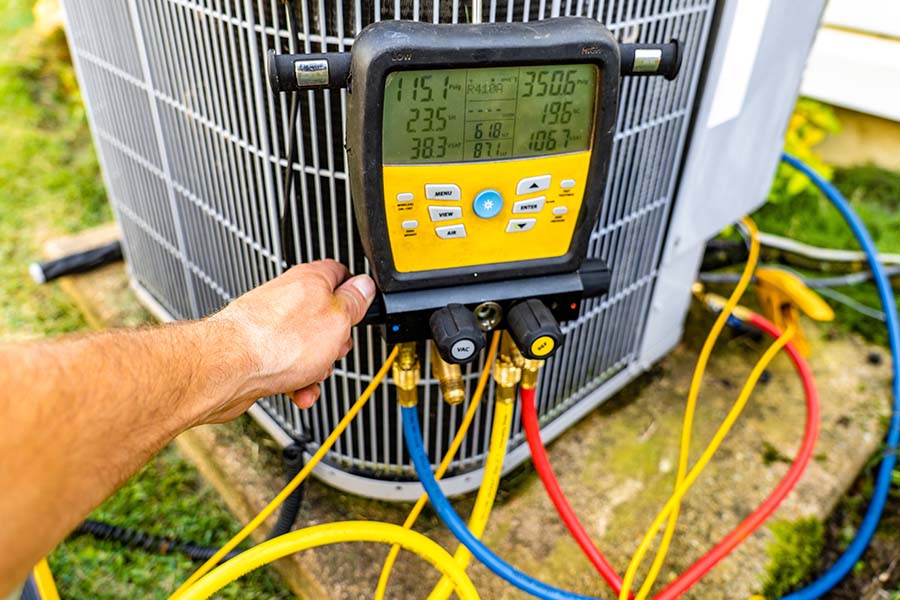
Are you still wondering, “Why is my AC making a hissing noise?” Most likely, you either have a refrigerant leak or a faulty compressor — and in both cases, a professional HVAC technician needs to diagnose and repair the problem. Our team at Coral Air Conditioning is here to help.
Give us a call today to book air conditioner repair in Sanibel Island, or check out our guide to understanding air conditioner service intervals.